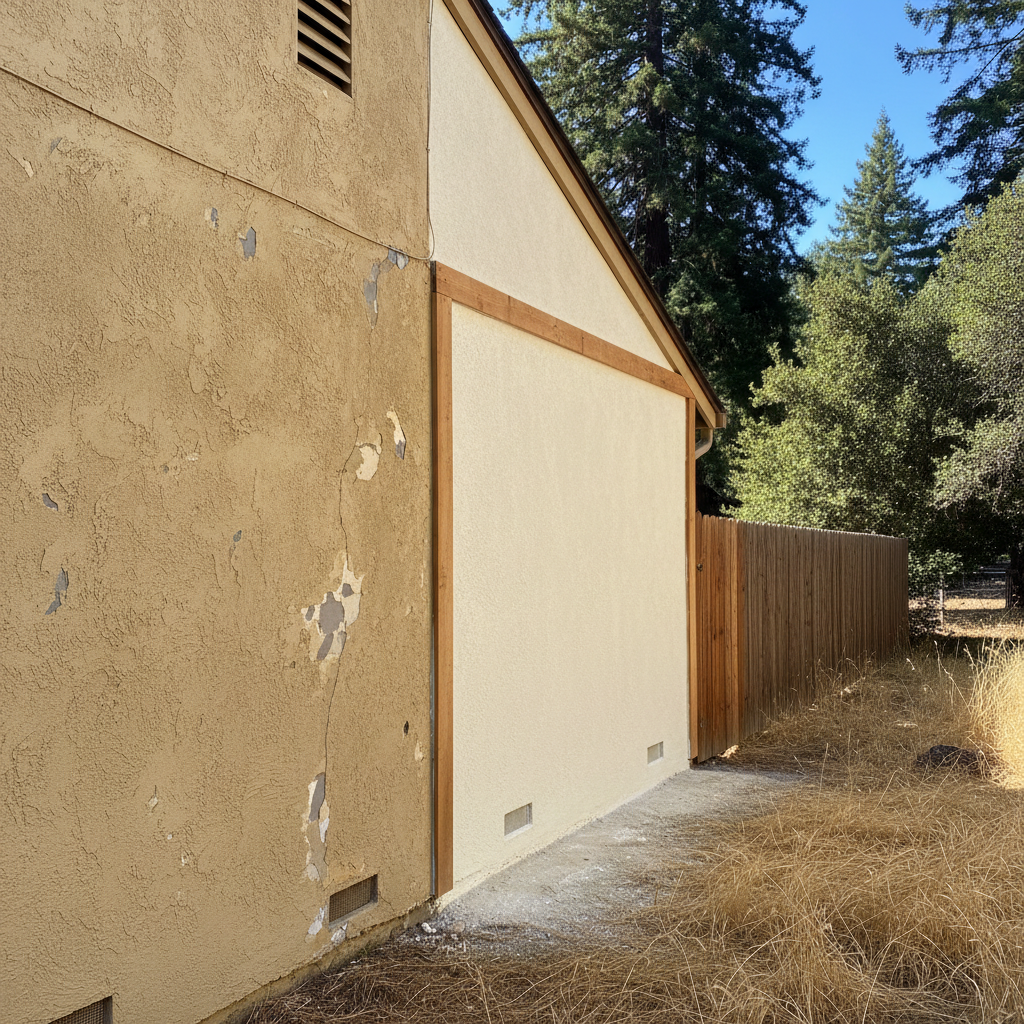
Alright, let's talk stucco. If you're thinking about putting new stucco on your Ben Lomond home, or maybe giving what's already there a facelift, you've probably heard about two main types: traditional (sometimes called hard-coat) stucco and synthetic (often known as EIFS, which stands for Exterior Insulation and Finish System). It can get a bit confusing, and there's a lot of chatter out there, so I want to clear things up for you.
Traditional Stucco: The Old Reliable
This is what most folks picture when they hear 'stucco.' It's a mix of cement, lime, sand, and water, applied in a few layers over a lath – usually a metal mesh. It's been around for centuries, and there's a good reason for that, you know?
Cost
Generally, traditional stucco will hit your wallet a little less hard upfront compared to synthetic. The materials are pretty common, and the application methods? Well, most experienced stucco guys, like us at Alpha Stucco Solutions, know them inside and out. The labor can be intense because of all the layers and drying times, but the material cost itself is usually lower.
Durability
This stuff is tough as nails. When it's put on right, traditional stucco forms a hard, impact-resistant shell. It breathes too, which means it can handle some moisture without trapping it. That's a huge deal here in Ben Lomond, where we get those heavy winter rains followed by bright, sunny days. It's not unusual to see traditional stucco homes around here that are 50, 60, even 80 years old and still looking good, assuming they've been kept up.
Maintenance
Pretty simple, really. Keep it clean, fix any cracks quickly, and make sure your gutters and drainage are doing their job. If water gets behind it and just sits there, you'll have problems, but honestly, that's true for just about any exterior siding. Small cracks are patchable, and if it gets really worn, you can always re-dash it.
Appearance
Traditional stucco has a classic, earthy feel. It's got a natural texture that a lot of people just love. You can get it in various finishes – smooth, sand float, dash – and it takes paint well. It just feels solid, doesn't it?
Synthetic Stucco (EIFS): The Modern Way
EIFS is a whole different animal. It's a multi-layered system that starts with an insulation board (think foam), then a base coat with a fiberglass mesh, and finally a finish coat that's usually acrylic. You often see it on commercial buildings, but it's found its way into homes too.
Cost
Expect synthetic stucco to be more expensive upfront. The materials themselves are generally pricier, and putting it on requires special know-how and a real eye for detail. If it's not installed perfectly, you're just asking for trouble down the road.
Durability
Now, this is where it gets a bit tricky. EIFS is incredibly flexible and resists cracking really well, thanks to that acrylic finish and foam base. It's also a fantastic insulator, which can seriously cut down your energy bills. But its biggest weakness, especially in a damp climate or where building codes aren't strictly followed, is moisture. If water gets behind that foam board and can't escape, it's trapped. We've seen homes in the redwood-shaded areas of Ben Lomond where a poor EIFS installation led to significant dry rot and mold issues because the system couldn't breathe or drain properly. This is why proper flashing and sealants are absolutely critical with EIFS.
Maintenance
Similar to traditional, you'll want to keep it clean. But you'll also need to be extra careful about any penetrations – windows, doors, pipes – and make sure all sealants are holding up. If you get a puncture or a crack that lets water in, you need to fix it immediately. Repairing EIFS can also be more complicated and costlier than traditional stucco because of its layered system.
Appearance
Synthetic stucco gives you a much wider range of colors and textures, and it can be molded into decorative shapes more easily than traditional stucco. It can look very smooth and uniform, almost like a painted surface, or it can mimic the look of traditional stucco. It often has a more uniform, 'perfect' look.
My Recommendation for Ben Lomond Homeowners
Considering our specific conditions here in Ben Lomond – the dampness from the redwoods, those occasional heavy rains, and the need for a tough exterior – I almost always lean towards traditional stucco for residential projects.
Why, you ask? It's simple: traditional stucco is more forgiving. Its breathability is a huge advantage when you're dealing with moisture. While EIFS offers great insulation and can look fantastic, the risk of trapped moisture and the potential for severe damage if it's not installed or maintained perfectly is just too high for most homeowners to comfortably manage in our environment.
Don't get me wrong, EIFS isn't bad. It definitely has its place, especially in certain commercial applications or very specific architectural designs where its insulation properties are super important and maintenance is handled with extreme care. But for the average Ben Lomond home, where you want something durable, reliable, and relatively low-stress over the long haul, traditional stucco is usually the smarter bet.
Ultimately, the best choice depends on your specific home, budget, and what matters most to you. But if you're looking for my honest opinion as a local contractor who's seen it all, stick with the tried and true. It's proven itself in our climate, and that's hard to beat.